 BC Class 5&7
BC road signs
All the signs in the printable chart, in the same groups, with the same wording.
Download the printable chart (PDF)
Stop, yield and entry
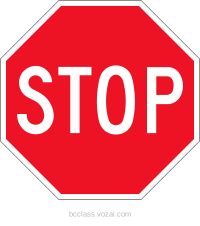
Bring your vehicle to a full stop here, and go on only when the way is safe.
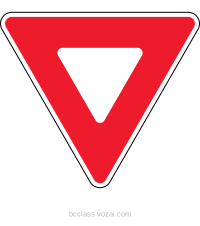
Let other vehicles and people crossing go first, and be ready to stop.
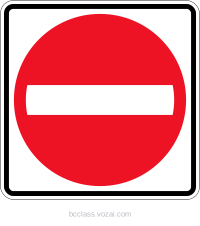
Do not drive this way, because it is usually an exit ramp and you would face oncoming traffic.
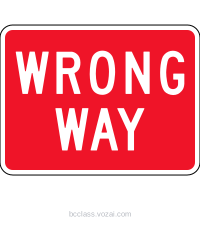
You are heading the wrong way, usually onto an exit ramp, so do not go on.
Rules for drivers
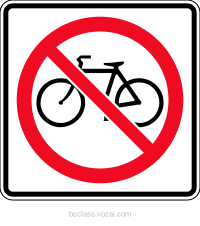
Bicycles are not allowed to be ridden past this point.
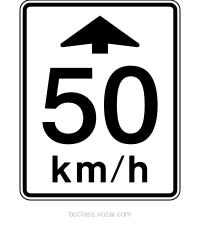
A 50 km/h limit starts further on, so begin slowing down before you reach it.
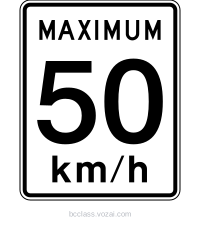
The highest legal speed here is 50 km/h, even if other drivers go faster.
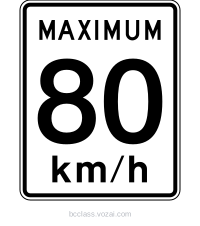
The highest legal speed here is 80 km/h, and bad conditions can call for much less.
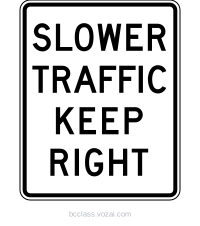
If you drive slower than the traffic around you, stay in the right lane.
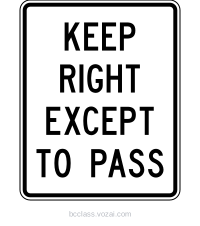
Stay in the right lane and use the left lane only when overtaking.
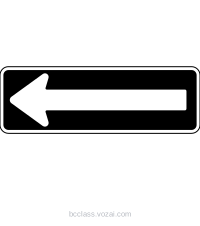
Traffic on the cross street moves only in the direction the arrow points.
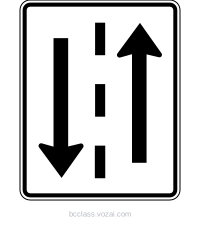
Vehicles travel in both directions here, so keep to the right unless overtaking.
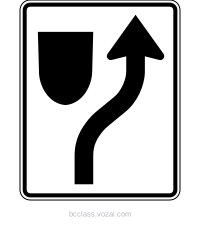
Pass on the right side of the island or barrier that divides the road.
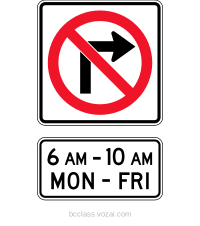
Right turns are banned during the days and hours shown on the tab below.
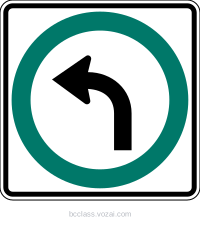
From this lane you must turn left, following the arrow.
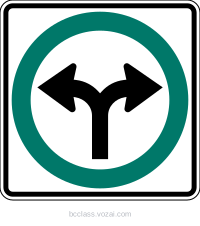
At this intersection you must turn, either left or right, and may not go straight.
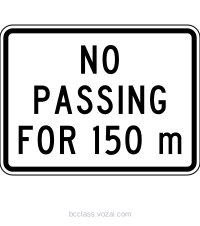
Overtaking is banned for the distance shown on the sign.
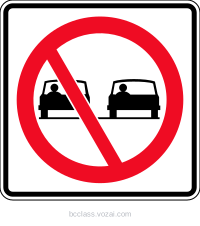
You may not overtake another vehicle along this stretch.
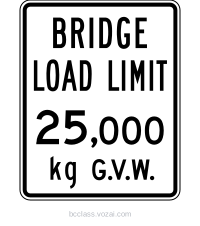
No vehicle heavier than the weight shown may cross this bridge.
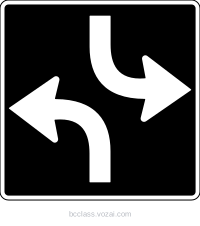
This centre lane is shared by drivers from both directions for turning left.
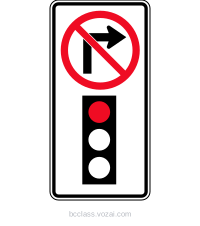
Do not turn right while the light is red, and wait for a green signal.
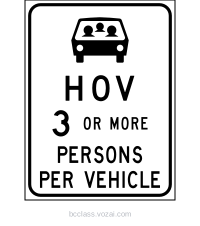
A vehicle needs at least the number of people shown to drive in this lane.
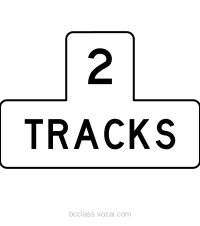
The number tells you how many sets of tracks cross the road at this crossing.
Lane signs
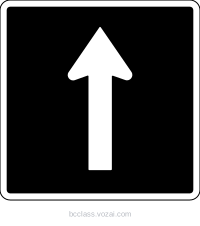
Drivers in this lane must go straight and may not turn.
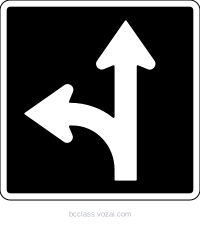
Drivers in this lane may go straight or turn left, but may not turn right.
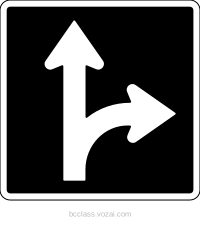
Drivers in this lane may go straight or turn right, but may not turn left.
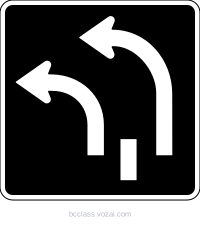
Drivers in either of these two lanes must turn left.
Parking and stopping
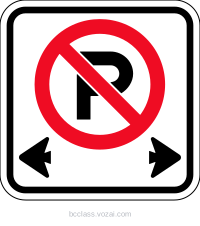
You may not leave your vehicle parked here, or you risk a fine or a tow.
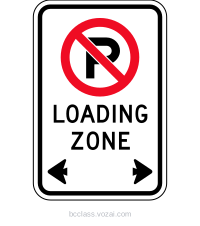
This space is only for vehicles that are loading or unloading.
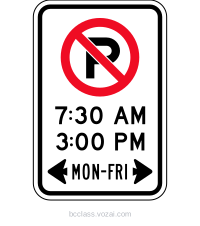
Parking is not allowed on the days and during the hours shown on the sign.
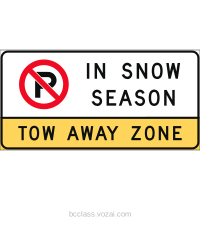
In snow season, a vehicle parked here can be towed away.
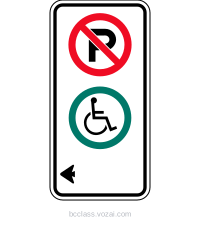
This space is kept for vehicles that display the permit and carry a person with a disability.
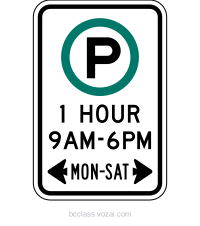
You may park here, for no longer than the time shown, during the listed days and hours.
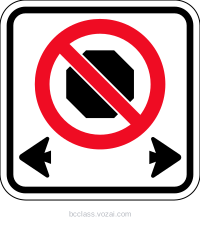
You may not stop here, and the ban runs until the next no-stopping sign.
Road shape and conditions
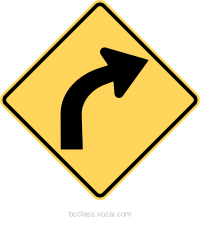
The road bends to the right ahead, so adjust your speed for the bend.
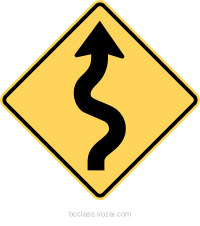
Several bends follow one after another, the first one turning to the right.
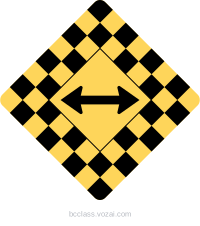
You cannot continue straight here and must turn right or left.
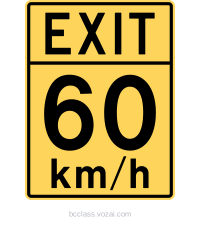
The suggested speed for taking this highway exit is 60 km/h.
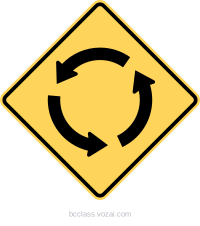
A roundabout is coming up, so slow down and get ready to give way.
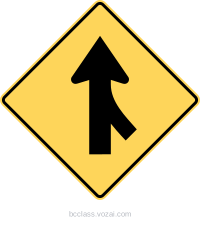
Another lane joins yours from the right, and both drivers need to adjust.
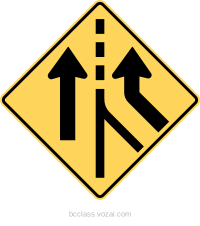
A road joins from the right and gives you an extra lane there.
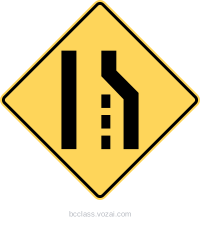
The right lane stops ahead, so start moving into the other lane early.
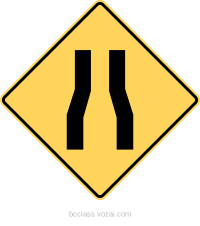
The road gets tighter ahead but keeps the same number of lanes.
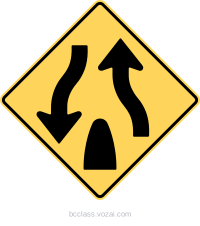
The divided road ends ahead, so keep right where the divider stops.
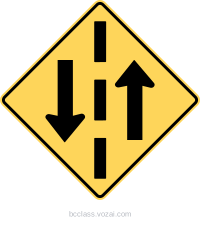
The divided road ends, and vehicles will soon come toward you in the next lane.
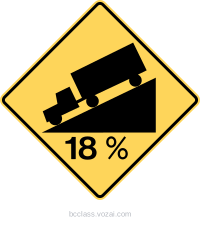
A steep downhill is ahead, so slow down and use a lower gear.
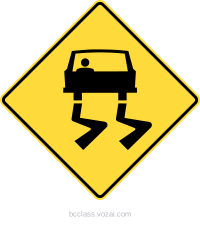
This stretch can lose grip, especially when wet, icy or covered in loose material.
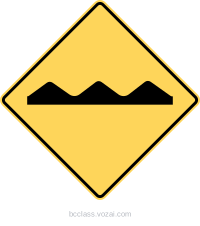
Expect a bump or rough patch in the road ahead.
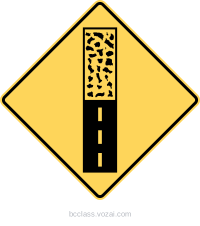
The paved road turns to gravel ahead, where tires grip less and stones may fly up.
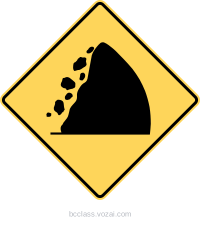
Rocks may come down from the slope and lie on the road ahead.
Things on or beside the road
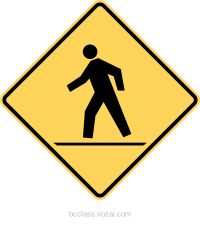
A crosswalk is coming up, so watch for people walking across.
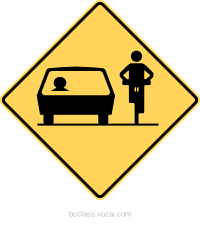
Cyclists use this road too, so leave extra room when you pass them.
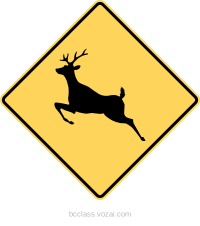
Deer may be on or near the road, most often around dawn and dusk.
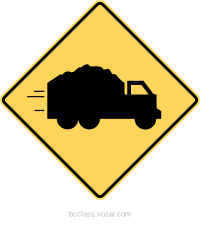
Trucks may cross your path as they enter or leave a site, often slowly.
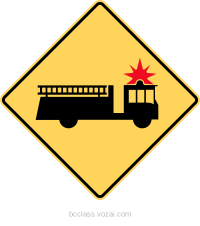
Fire trucks may drive out onto the road with little warning, so be ready to stop.
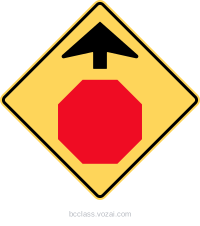
A stop sign is coming up, so get ready to stop at the intersection.
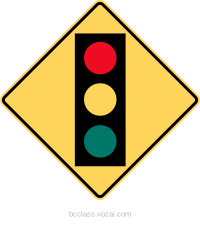
A traffic light is coming up, and if the sign's lights flash, be ready to stop.
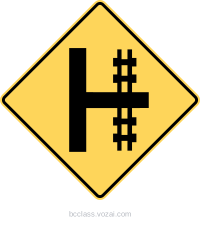
A railway crossing is on a side road to the right, and cars ahead may stop for it.
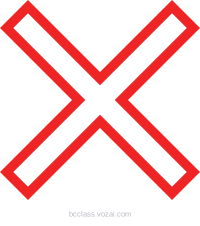
A railway crosses here, and you must give way to any train even without gates or lights.
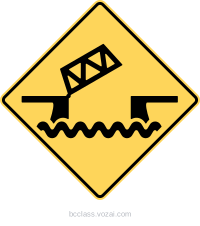
The bridge lifts or swings for boats, so you may have to stop and wait.
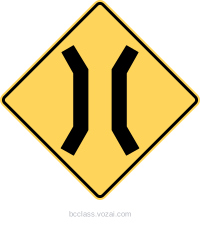
A narrow bridge or other structure is ahead, with less room at the sides.
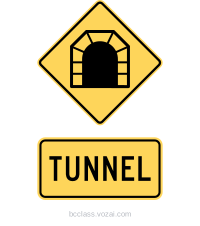
A tunnel is ahead, so slow down before the entrance while your eyes adjust to the dim light.
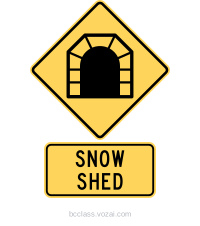
The road runs under a roof that shields it from snow, and the light changes suddenly.
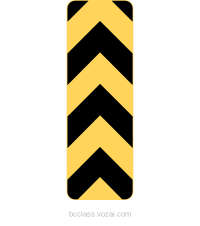
An obstruction stands in the road, and you may pass on either side of it.
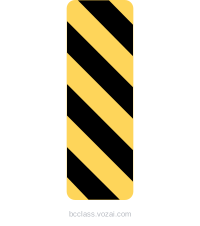
An obstruction stands in the road, and you must pass on its right.
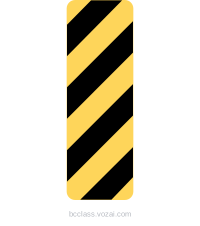
An obstruction stands in the road, and you must pass on its left.
School and playground areas
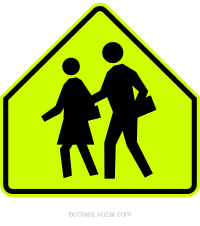
Children may be near the road, so slow down and watch for them.
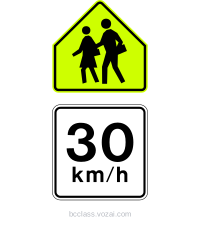
The limit is 30 km/h in this school zone from 8 a.m. to 5 p.m. on school days.
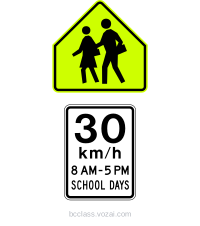
The 30 km/h limit applies in this school zone only during the hours written on the plate.
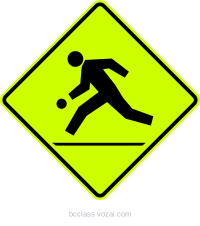
A playground is close to the road, so be ready to slow down.
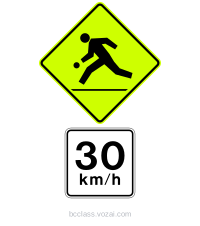
The limit is 30 km/h here every day, from dawn until dusk.
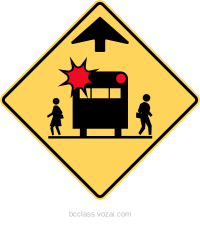
A school bus stop is coming up, where buses halt and children may be walking or crossing.
Construction and work zones
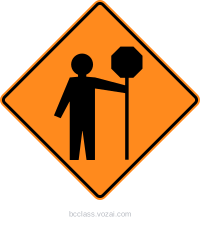
A traffic control person is ahead because of road work or maintenance.
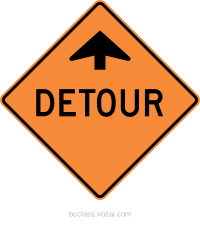
Traffic will be sent off its usual route ahead, so follow the signs and any traffic control person.
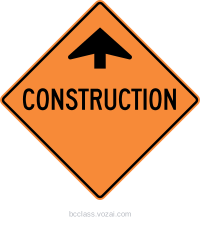
A work zone is ahead, so keep to the posted speed and leave plenty of room around equipment.
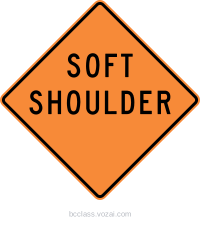
The edge of the road ahead is soft and may not hold a vehicle, so stay off it.
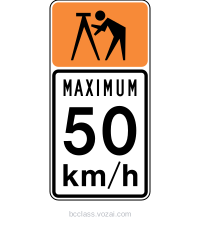
A survey crew is working near the road, so drive no faster than 50 km/h.
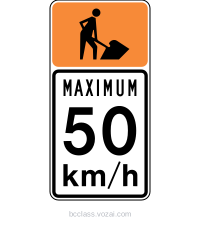
A work crew is in the area, so drive no faster than 50 km/h.
Direction and distance
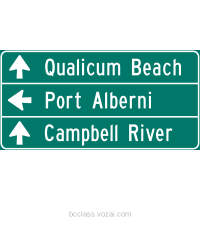
Each place name has an arrow showing which way to turn or go straight.
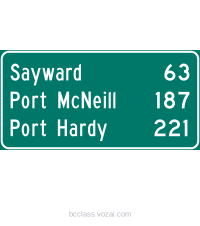
It lists the distance to the places named, with the numbers given in kilometres.
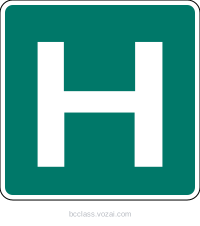
A hospital is nearby.
Information and services
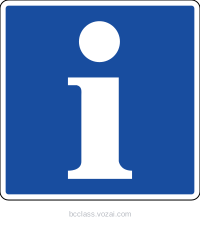
A centre ahead can give you route, road condition and visitor information.
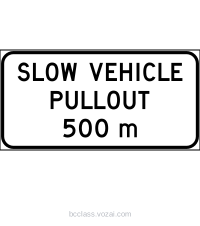
A pullout for slow vehicles begins at the distance in metres shown on the sign.
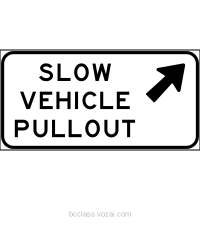
The pullout for slow vehicles is right here, in the direction of the arrow.
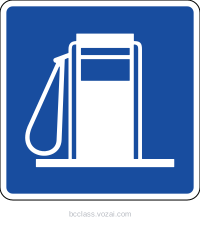
You can buy fuel ahead.
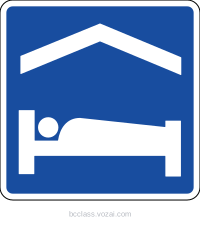
Places to stay overnight are ahead.
Highway route markers
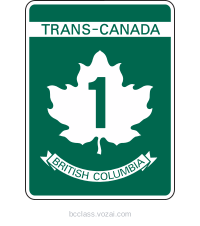
It tells you that you are on the Trans-Canada Highway, Highway 1.
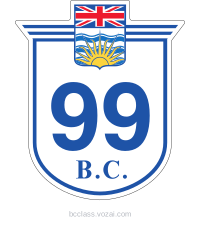
It tells you which numbered primary highway you are on, here Highway 99.